Tesla Powerwall 3 vs Sungrow SBH: Which Home Battery Wins in Victoria in 2026?
A detailed Victorian comparison of the Tesla Powerwall 3 and Sungrow SBH home batteries — specs, backup power, solar pairing, warranty, rebates and value for money.
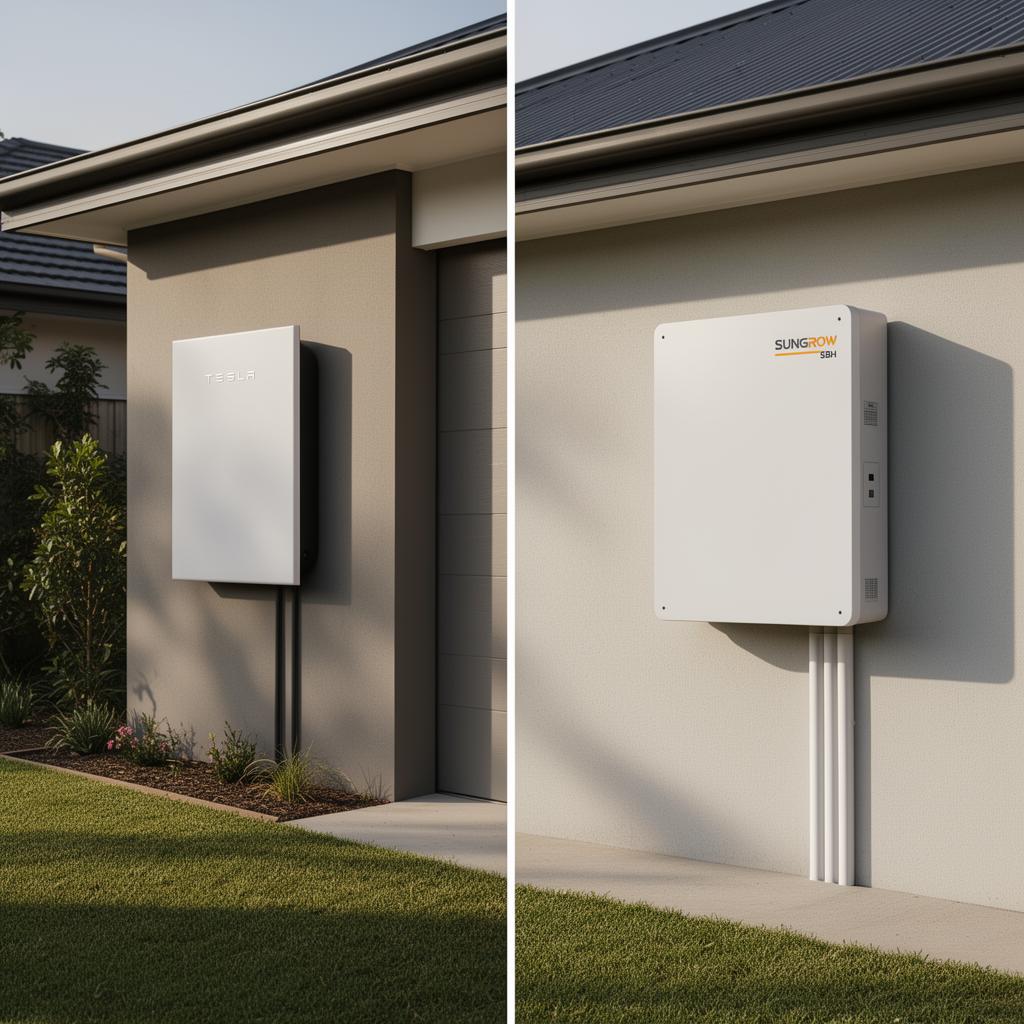
Tesla Powerwall 3 and the Sungrow SBH series are two of the most-requested home batteries in Victoria right now. Both are modular, AC- or DC-coupled depending on configuration, and both qualify for the federal Cheaper Home Batteries Program. So which one is the smarter buy for a Victorian home in 2026? This guide compares them on the things that actually matter — usable capacity, backup, solar pairing, warranty and total installed value.
The quick answer
For most Victorian homes adding solar at the same time, Powerwall 3 is the simplest premium option. For homes that already have a working solar inverter, or want to stack capacity over time, Sungrow SBH usually wins on flexibility and price.
| What matters most | Better choice |
|---|---|
| Single all-in-one unit with a built-in hybrid inverter | Tesla Powerwall 3 |
| Highest continuous and peak backup power | Tesla Powerwall 3 |
| Most flexible capacity sizing (9.6–25+ kWh) | Sungrow SBH |
| Best for homes with an existing string inverter | Sungrow SBH |
| Easiest whole-home backup setup | Tesla Powerwall 3 |
| Lowest entry price point | Sungrow SBH |
| Strong app and energy-monitoring experience | Both — Tesla edges ahead |
Specifications at a glance
Always confirm exact figures against the latest manufacturer datasheets at quote time — both brands release minor revisions periodically.
| Spec | Tesla Powerwall 3 | Sungrow SBH |
|---|---|---|
| Usable capacity (single unit) | 13.5 kWh | 9.6 / 12.8 / 16 / 19.2 / 22.4 / 25.6 kWh (stackable) |
| Built-in hybrid inverter | Yes (11.5 kW) | No — pairs with Sungrow SH hybrid inverter |
| Continuous backup power | 11.5 kW | Up to 10 kW (inverter-dependent) |
| Peak / surge power | Up to 185 A motor-start | Inverter-dependent |
| Solar input (DC) per unit | Up to 20 kW PV | Configured via paired inverter |
| Scalability | Up to 4 units in parallel (54 kWh) | Stack battery modules per cabinet, multiple cabinets |
| Chemistry | LFP (lithium iron phosphate) | LFP (lithium iron phosphate) |
| Warranty | 10 years | 10 years |
| Backup compatibility | Whole-home backup capable | Whole-home or essential-circuit backup |
Backup power: what each one actually does in a blackout
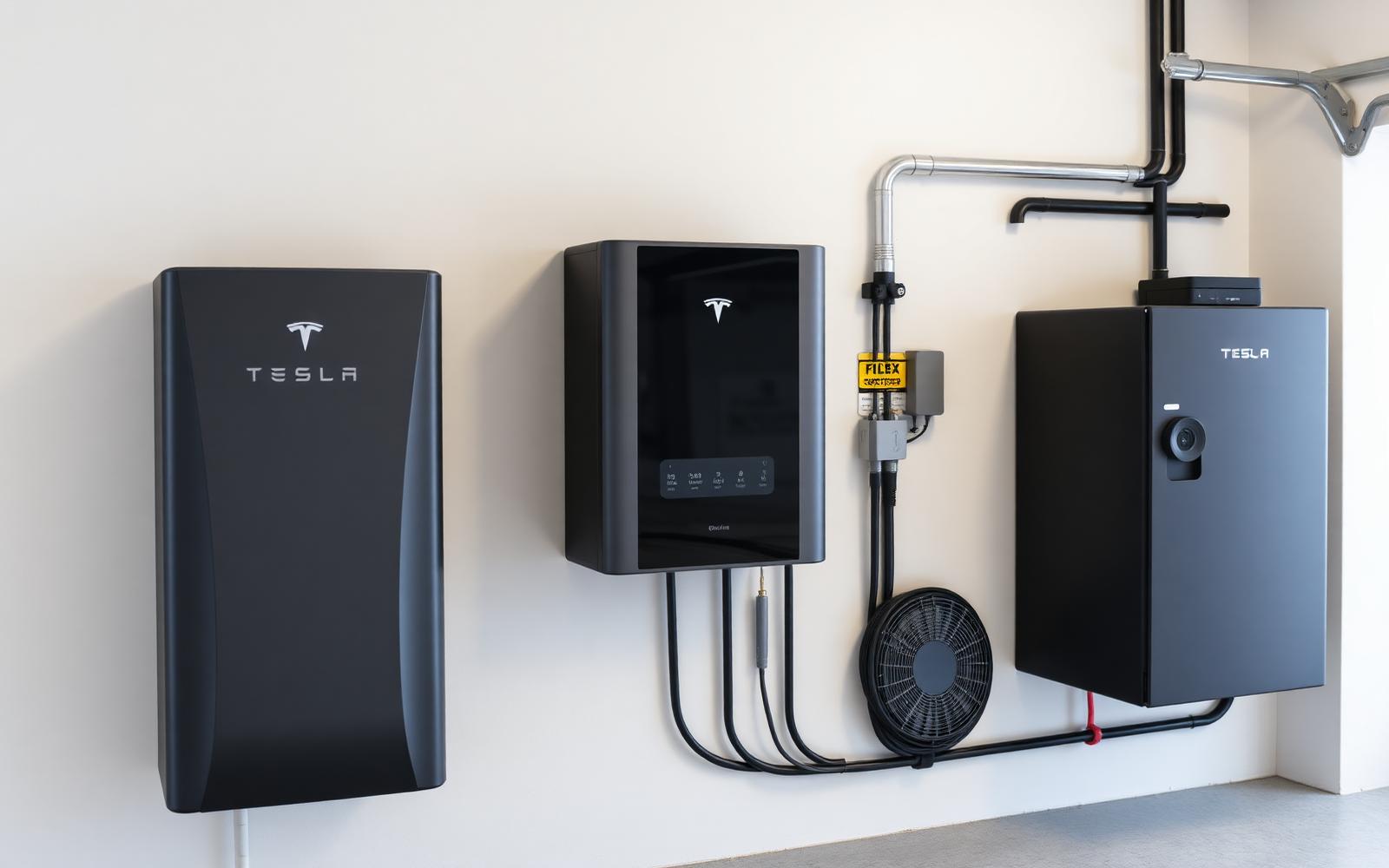
Powerwall 3 is built around a single integrated unit with 11.5 kW of continuous backup power. That's enough to run most Victorian homes — including air-conditioning, induction cooking and an EV charger on a managed schedule — without load shedding. Sungrow SBH backup is delivered through the paired Sungrow hybrid inverter (SH series). Continuous backup tops out around 10 kW on the larger three-phase models, with smaller single-phase setups closer to 5 kW. Both systems can be wired for whole-home or essential-circuits backup, but Powerwall 3's integrated approach makes the whole-home configuration simpler and more common.
Pairing with solar
Powerwall 3 has its own DC-coupled hybrid inverter built in, so on a brand-new install you don't need a separate solar inverter — panels connect straight into the Powerwall. That lowers parts count, install complexity and the chance of inverter/battery communication issues. Sungrow SBH is battery-only and requires a Sungrow SH hybrid inverter (or another approved hybrid). That's a strength if you already own a Sungrow inverter or want to mix and match — the battery slots in cleanly and uses the existing solar generation. It's a weakness if you're starting from scratch, because you're paying for and installing two boxes instead of one.
Capacity and scalability
Powerwall 3 is a fixed 13.5 kWh per unit. If you need more, you add another full Powerwall — up to four units (54 kWh) on one site. Sungrow SBH is modular by design: a single cabinet starts at 9.6 kWh and steps up in 3.2 kWh increments to 25.6 kWh, and you can run multiple cabinets. For households that want to start small and add capacity later as an EV or heat pump joins the home, SBH is the more granular path. For households that simply want 13–14 kWh of usable storage in one clean install, Powerwall 3 is the cleaner answer.
Rebates and pricing in Victoria
Final pricing depends on site complexity, backup wiring, switchboard upgrades and current rebate stacking — get a written, itemised quote before deciding.
- Both systems are CEC-listed and qualify for the federal Cheaper Home Batteries Program (around 30% off eligible storage from 1 July 2025 when paired with new or existing solar).
- Sungrow SBH typically has a lower entry price point — especially at the 9.6 kWh starter size — making it a strong fit for smaller budgets.
- Powerwall 3 commands a premium but bundles the hybrid inverter, so on a fresh solar+battery install the gap narrows considerably once you account for not needing a separate inverter.
- Indicative fully installed pricing in Victoria (2026): Sungrow SBH from around the low-to-mid teens of thousands depending on size and inverter choice; Powerwall 3 from the mid-to-high teens of thousands depending on switchboard and backup scope.
Warranty and lifespan
Both Tesla and Sungrow offer a 10-year battery warranty with throughput and end-of-warranty capacity guarantees. Both use LFP chemistry, which is the preferred chemistry for residential storage in Australia thanks to its thermal stability and long cycle life. In practice the warranties are close enough that warranty alone shouldn't decide the call — installer quality and post-install support matter more.
App, monitoring and smart features
Tesla's app remains the benchmark in home energy: clean live data, granular control of backup reserve, time-of-use scheduling and storm-watch pre-charging. Sungrow's iSolarCloud is solid and has improved significantly — you get live generation, consumption and battery state of charge, plus remote firmware updates. Tesla still edges ahead on overall polish; Sungrow is more than adequate for everyday monitoring.
Who should pick which?
| Your situation | Best fit |
|---|---|
| Brand-new solar + battery install, want one clean unit | Tesla Powerwall 3 |
| Already have a working solar inverter you want to keep | Sungrow SBH |
| Want to start small (around 9.6 kWh) and scale later | Sungrow SBH |
| Whole-home backup with high continuous load (AC, EV, induction) | Tesla Powerwall 3 |
| Three-phase home wanting matched inverter+battery from one brand | Sungrow SBH |
| Premium ecosystem feel, polished app, simple install | Tesla Powerwall 3 |
| Lowest installed cost for ~10 kWh of storage | Sungrow SBH |
Frequently asked questions
Can I add a Powerwall 3 to my existing solar system?
Can I add a Sungrow SBH to a non-Sungrow inverter?
Are both eligible for the federal battery rebate?
Which is better for an EV household?
Do either work off-grid?
Final takeaway
Tesla Powerwall 3 and Sungrow SBH are both excellent choices in 2026 — the right answer depends less on the battery itself and more on your house. If you're starting from scratch and want one premium box that does everything, Powerwall 3 is hard to beat. If you already have solar, want modular capacity, or are sizing to a tighter budget, Sungrow SBH is the smarter spend. Either way, the most important variable is the installer — get a written quote that shows the inverter, battery, switchboard scope and backup configuration before signing.
Call 1300 767 652 or request a free, no-obligation quote tailored to your home, energy usage and rebate eligibility.